This year, colleagues from CEET once again took an active role in environmental education for the general public as part of the traditional international Earth Day celebrations. They brought their scientific findings to three different locations: Ostrava, Vysoké Mýto, and Jablonec nad Nisou.
A team from the CEET Institute of Environmental Technology consisting of Tereza Bílková, Ivana Troppová and Rudolf Ricka, took part in an event organised by the Korunka Leisure Centre on Hlavní třída in Ostrava. They prepared a diverse programme for visitors of all ages, combining entertainment with learning. In addition, the public is involved in data collection as part of the citizen science project INOVO!!! (CZ.02.01.01/00/23_021/0008588).
The scientists focused on practical topics such as waste sorting, proper bio-waste handling and its subsequent use for energy production. They offered visitors tips on how to prevent food waste in everyday life and highlighted the indispensable role of science in water treatment and air protection.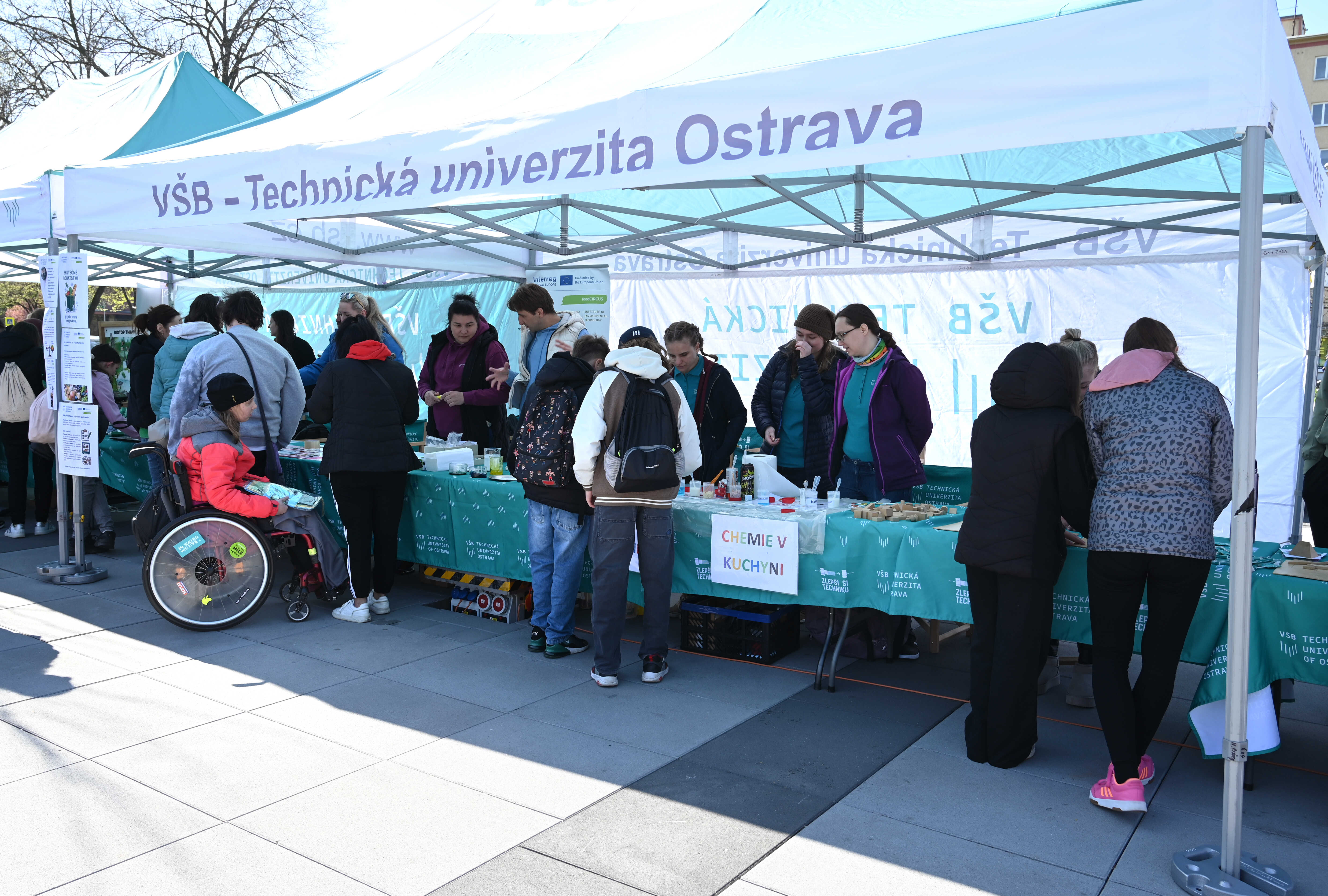
Meanwhile, colleagues from the CEET Energy Research Centre visited Vysoké Mýto and Jablonec nad Nisou with the popular SMOKEMAN´s education show. Jiří Horák, together with Jiří Ryšavý and František Hopan, explained the basic principles of proper household heating, and through interactive experiments, they demonstrated where the energy in wood comes from and how it can be used efficiently and in an environmentally friendly way.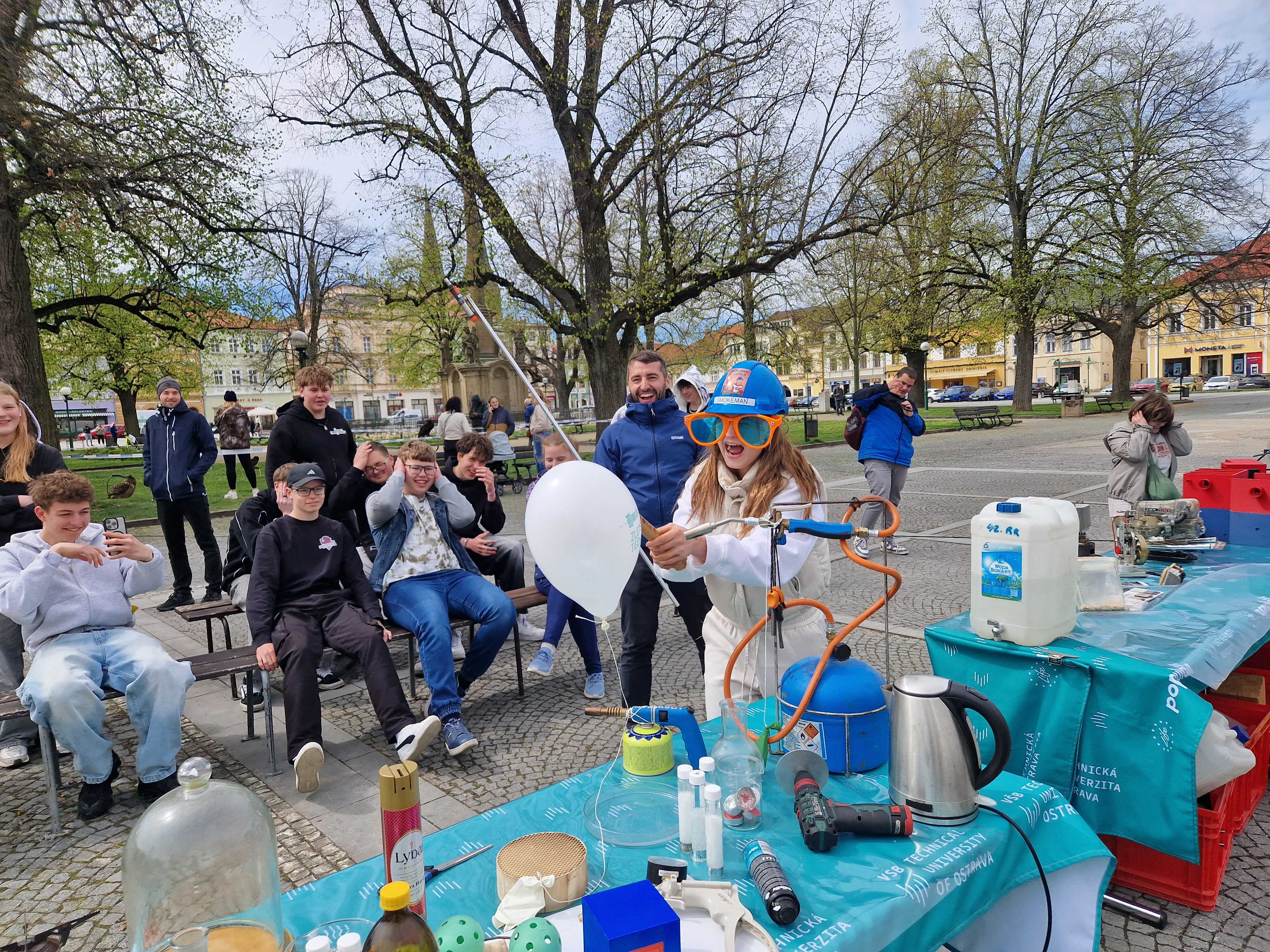 “I would like to sincerely thank all three 'Smokemen' who put on a 'smoke show' that was successful in every respect. The performance impressed us not only with its interactive and entertaining format, but above all with its high level of expertise and the clear communication of important information. It was wonderful to see how the gentlemen engaged the audience and communicated with them so actively. Based on participants’ feedback, I can confirm that the show was truly very well received and met, and in many respects even exceeded, expectations,” said Veronika Richtrová, head of the environmental department of the town of Vysoké Mýto.
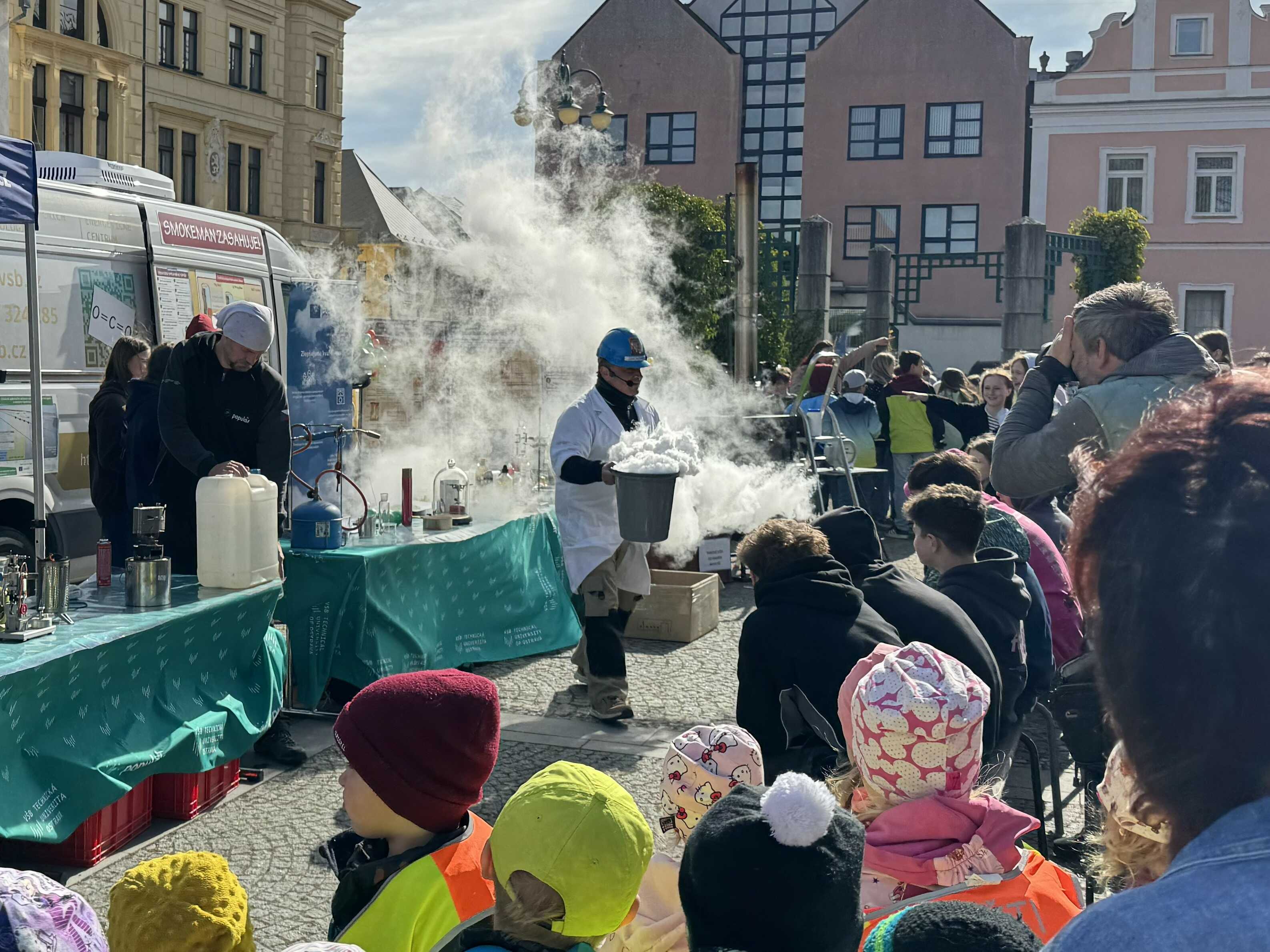 The strong interest shown by visitors, as well as the number of questions they asked, confirmed that environmental issues are becoming increasingly important to the public. At the same time, the programme demonstrated that even professional scientific topics can be communicated in an engaging and understandable way across generations. We are already looking forward to similar events next year.