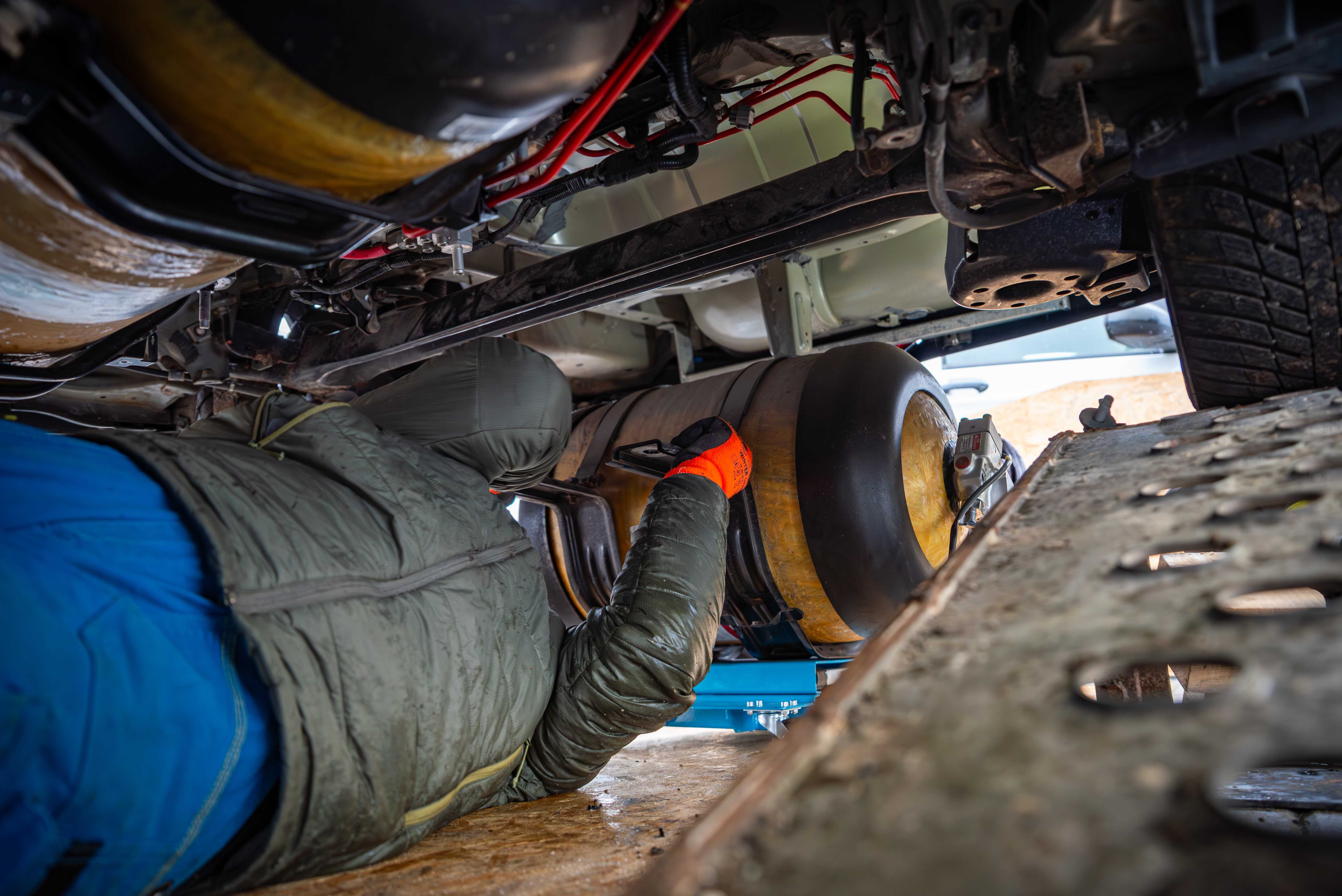
Expert teams simulated scenarios that may occur during fires, extreme thermal loads, or mechanical damage to pressurized systems. These situations represent the most demanding challenges for the safe deployment of hydrogen in real-world applications. It is becoming evident that the future of hydrogen technologies depends not only on performance, but above all on how effectively we manage risk conditions.
CEET actively contributed to the experiments, bringing an essential perspective from the fields of energy systems and technological applications. While safety specialists focused on testing critical scenarios, CEET helped bridge the results with their future use in energy, transport, and industry. This integration of research and practical application gives the project its substantial value.
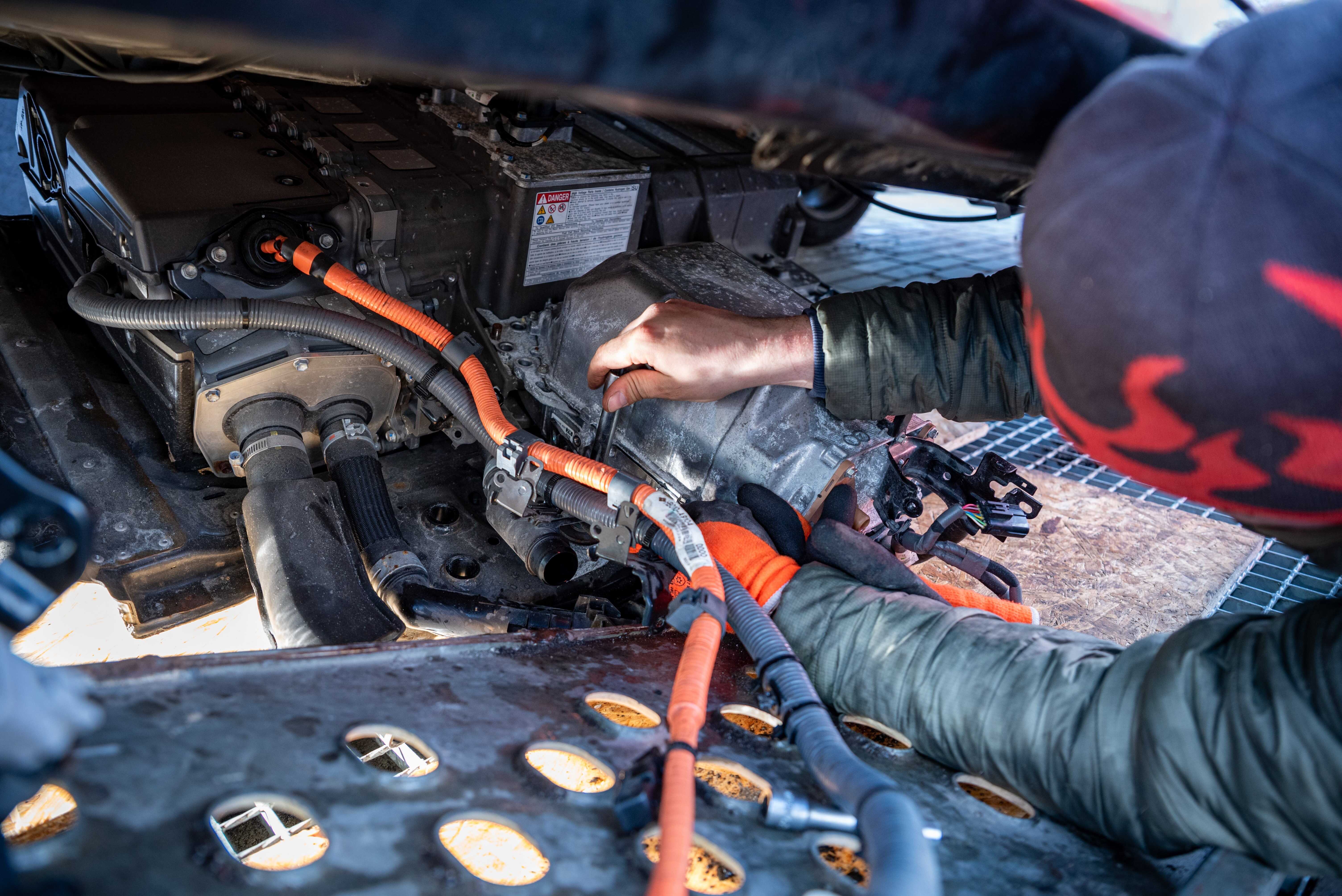
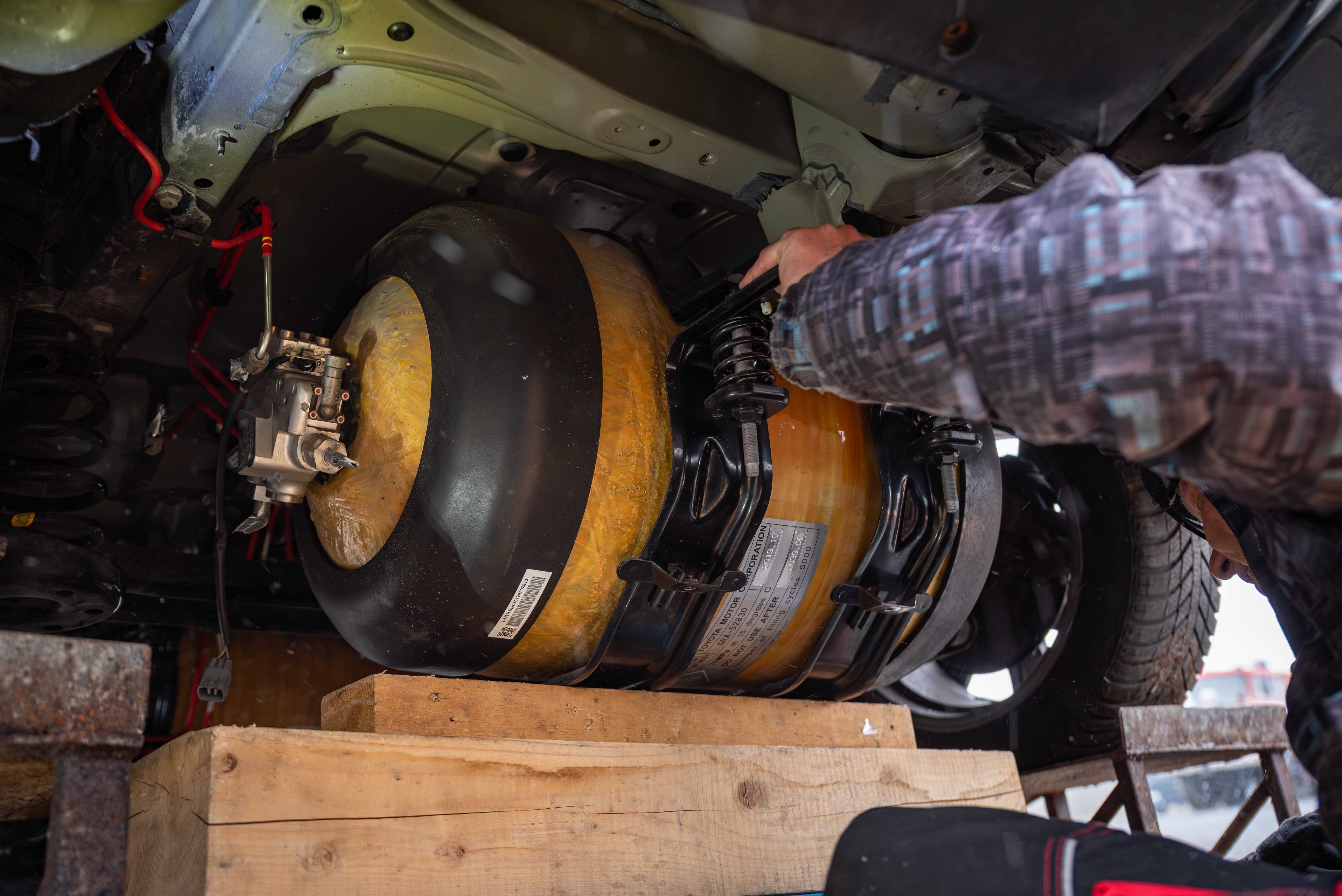
The tests included, for example, verification of the resilience of composite pressure vessels used in hydrogen-powered vehicles. The teams monitored their behavior under fire exposure, the operation of pressure relief devices at elevated temperatures, and the possibilities for safe depressurization. The experiments also involved destructive testing of steel pressure vessels filled with hydrogen and nitrogen, providing detailed insights into rupture mechanisms and fragment dispersion.
The collected data revealed that modern composite vessels behave differently under critical conditions compared to traditional steel systems. Understanding these differences is essential for the design of safer technologies.
Only through real-world testing under extreme conditions can we truly understand the behavior of hydrogen systems. The data obtained not only enable more accurate safety measures but also improve the preparedness of emergency response units for situations that cannot be fully simulated.
 The experiments involved a wide range of institutions, including the Faculty of Safety Engineering at VSB – Technical University of Ostrava, the Centre of Excellence for Safety Research (CESAR), CEET, the Faculty of Civil Engineering and the Faculty of Mining and Geology at VSB-TUO, the University of Defence, the Czech Armed Forces, the Fire Rescue Service of the Czech Republic (including specialized units), and the Police of the Czech Republic. Students also actively participated, contributing to technical support, documentation, and data collection.
The project is now entering a phase of detailed evaluation. The results will support further research, scientific publications, and the development of methodologies and specific safety measures.
From CEET’s perspective, this represents an important step toward ensuring that hydrogen becomes not only a symbol of a clean future, but also a reliable and safely managed component of modern energy systems.
The experiments were carried out within the project REFRESH – Research Excellence For Region Sustainability and High-tech Industries (reg. no. CZ.10.03.01/00/22_003/0000048), specifically within Experimental Laboratory EL 4 – Laboratory for Combustion and Explosion Research.