The partnership is being formed within the framework of the ZEUS research project and focuses on the development of technologies to increase the resilience of energy networks under the conditions of decarbonisation and decentralisation.
The ZEUS project – Increasing the resilience of energy networks in the context of decarbonisation, decentralisation, and sustainable socio-economic development, connects research organisations and industrial partners with the aim of optimising energy production, distribution, and storage. Hydrogen technologies, digitalisation, and the use of advanced tools, such as digital twins, play a significant role in it.
The cooperation between CEET and Kolibrik.net expands the possibilities of connecting systemic research with detailed experimental diagnostics. While CEET research teams focus on modelling energy systems and managing hybrid sources, Kolibrik.net brings advanced technologies for monitoring and optimising electrochemical devices, such as electrolysers, fuel cells, or battery systems. Their solutions enable tracking the behaviour of individual cells in real time, identifying degradation, and increasing both the safety and efficiency of operation.
"Today, the resilience of energy networks cannot be addressed without a detailed understanding of the behaviour of individual technologies. It is the connection of advanced modelling with precise diagnostics in real operation that enables us to advance our research towards practically usable solutions. The cooperation with Kolibrik brings a combination of research expertise and technological know-how, which is essential for the further development of modern energy," stated Lukáš Prokop, Director of the ENET Centre.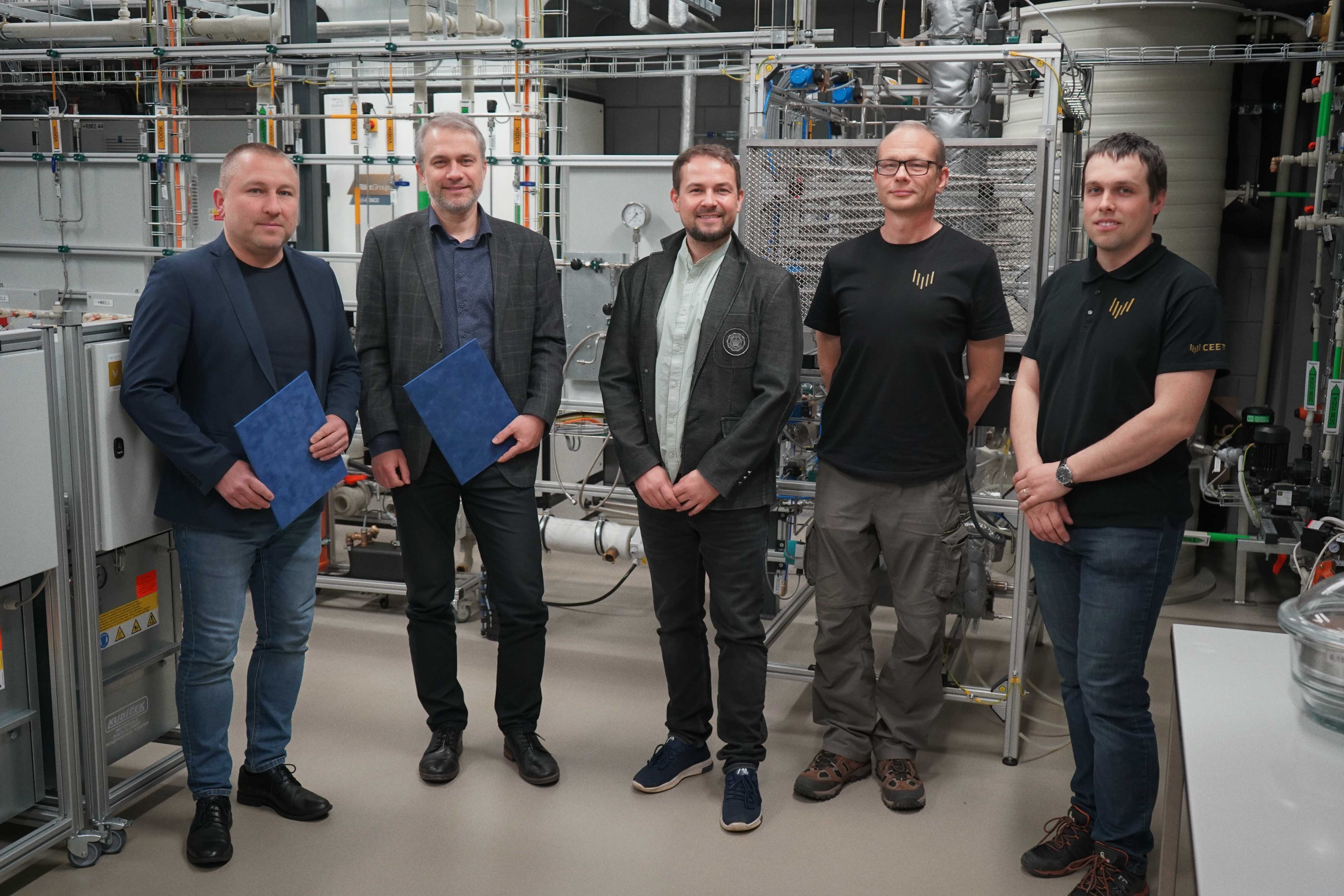 The ZEUS project relies on advanced research infrastructure, including the experimental platform CEETe, which makes it possible to simulate and manage the operation of multi-source energy systems in real time. Part of the research is also the development of digital twins for hydrogen technologies and the optimisation of their deployment in energy networks. The supercomputing capacities of the IT4Innovations centre also play a significant role, enabling the processing of complex models and scenarios.
The involvement of Kolibrik.net in the project brings the opportunity to verify theoretical models using real data and, at the same time, increase the technological level of the devices being developed. Advanced monitoring systems will allow for the detailed analysis of the operation of electrolysers, fuel cells, and batteries, which will lead to higher efficiency, longer lifespans, and safer operation of these technologies.
Co-funded by the European Union within the framework of the project „Increasing the resilience of power grids in the context of decarbonisation, decentralisation and sustainable socioeconomic development“, project registration number: CZ.02.01.01/00/23_021/0008759, Jan Amos Komenský Operational Programme.