The development took place as part of project TK05020042 – "Development of a plasma torch for thermochemical conversion of feedstock into high-concentration hydrogen gas". During the project, the Thermochemical and Hydrogen Conversion research group designed not only the torches themselves, but also their power supply, cooling systems, utility distribution pipework, and an industrial measurement and control system. The result is a comprehensive technology that can be integrated into experimental units as well as future industrial production lines.
Two Power Ratings for Different Conditions
A plasma torch, also referred to as a plasmatron, uses electrical energy to generate a high-energy plasma environment. This provides the process with the energy required for the thermochemical decomposition of feedstock and its conversion into synthesis gas.
The developed torches differ not only in power output but also in their intended application:
The two newly developed torches differ not only in power output but also in their intended applications. The 50 kW plasmatron has been designed primarily for research and experimental units, as its operation can be readily adapted to experimental conditions, including rapid changes and power modulation.
The 100 kW plasmatron, on the other hand, is intended mainly for long-term operation in industrial technologies. Its design reflects the requirements for stability, reliability, and continuous operation.
Development Was Not Limited to the Torch Alone
One of the project's principal objectives was to improve operational stability and extend the service life of the electrodes, which are subjected to extreme thermal and electrical loads. The research team also focused on energy efficiency, power control, the selection of plasma-forming gases, and the integration of the plasma torches into practical industrial technologies.
Numerical simulations based on the Finite Element Method (FEM) formed an important part of the development process. These simulations made it possible to analyse the electromagnetic field inside the plasmatron and model the flow of the plasma-forming gas. The results provided valuable information on temperature distribution, gas behaviour within the device, and the expected shape of the plasma plume emerging from the torch.
These computational analyses complemented both the engineering design work and the experimental testing of the two systems.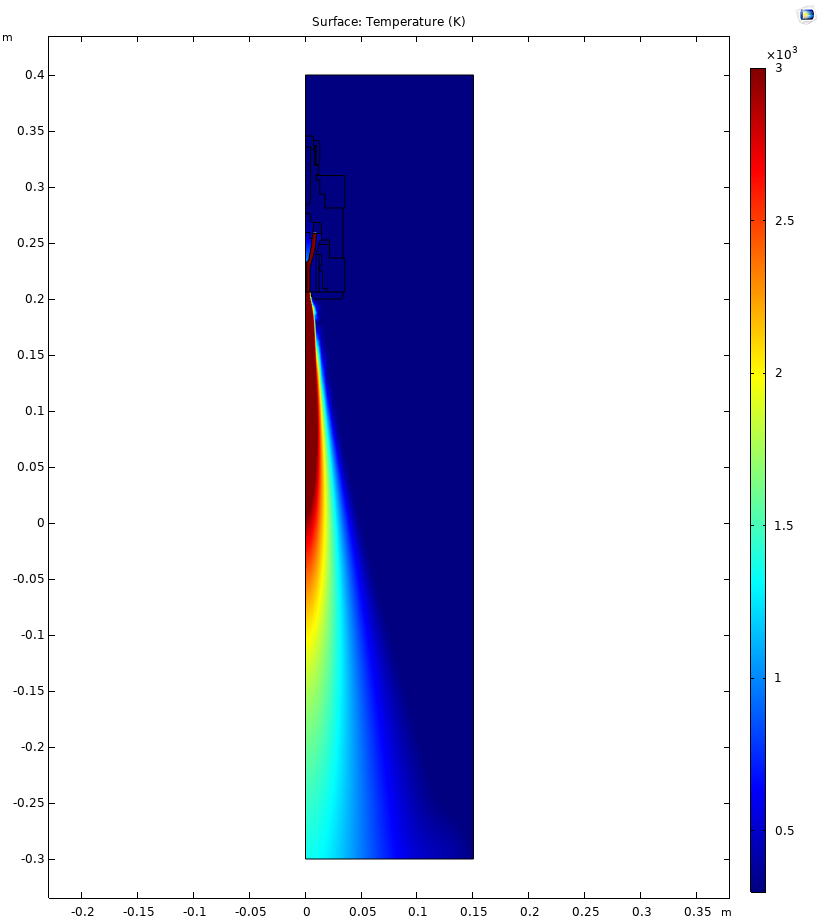 Argon, Nitrogen, and Water Vapour
The new torches can operate with several types of plasma-forming gases, such as argon, nitrogen, or water vapour. The choice of working medium allows the plasma properties to be tailored to a specific process and the desired composition of the resulting gas.
The use of water vapour is of particular significance. It actively participates in the chemical reactions taking place during thermochemical conversion and can help increase both the overall volume and proportion of hydrogen in the produced synthesis gas. This principle is supported by technical literature on plasma gasification, which identifies steam injection as a key parameter influencing the production of hydrogen-rich gas.
Synthesis gas is a mixture composed primarily of hydrogen and carbon monoxide. Depending on its composition, it can be utilised for energy recovery or processed as a feedstock for downstream chemical and fuel production.
“Research in plasma technology holds significant promise, particularly due to the potential to transform selected types of waste materials into synthesis gas, which can then be used either as a raw material or for energy recovery. This technology can thus contribute not only to energy sector development but also to reducing environmental impact, for example through the safe treatment of hazardous waste,” said Jan Najser, Head of the Thermochemical and Hydrogen Conversion research group.
A Complete System Controlled by Industrial PLCs
The final solution comprises more than just two plasma torches. The researchers also developed power supply units, utility distribution systems, cooling circuits, and the necessary instrumentation.
System control is based on industrial programmable logic controllers (PLCs). These enable real-time monitoring of operating parameters, power modulation, and rapid response to process fluctuations. It is precisely this integration of the plasmatron with power supply, cooling, media distribution, and automated control that forms the essential prerequisite for practical deployment.
The project was carried out in collaboration with an industrial partner, which made it possible to incorporate both research objectives and future operational requirements during development.
Applications in Energy and the Circular Economy
The developed plasmatrons can find application in technologies for processing materials that are difficult to recycle or treat using conventional methods, or in processes requiring high temperatures. For practical deployment, the plasma process must subsequently be optimised for the specific application.
In the future, plasma technologies could contribute to integrating the energy sector, resource recovery, and the principles of the circular economy. Their potential extends beyond energy production alone, as synthesis gas can also serve as a valuable feedstock for a wide range of industrial processes.
At the same time, the project has strengthened the technical expertise and technological capabilities of the research centres in designing highly specialised equipment, thermochemical and hydrogen conversions, decentralised energy generation, and low-emission industrial technologies.