Current legislative requirements, technological options and economic aspects were presented at the 5th meeting of the Transport Commission of the Association of Regions of the Czech Republic, which took place last week with the participation of regional governors and deputy governors responsible for transport.
CEET’s contribution to the project focuses primarily on the techno-economic assessment of hydrogen-based solutions and on the design of infrastructure concepts for urban and regional bus transport. The discussion centred mainly on the impacts of Act No. 360/2022 Coll., on the promotion of low-emission vehicles, and the EU ETS II system, which from 2026 will require public transport contracting authorities to include at least 30% locally zero-emission buses in new service contracts.
“Hydrogen mobility is not a universal solution, but it has a very clearly defined area of application. From both a technical and operational perspective, it is particularly suitable for long-distance routes and all-day operation, where battery-electric mobility encounters limitations related to driving range, charging time, or the capacity of the electricity grid,” said Stanislav Mišák, Director of CEET.
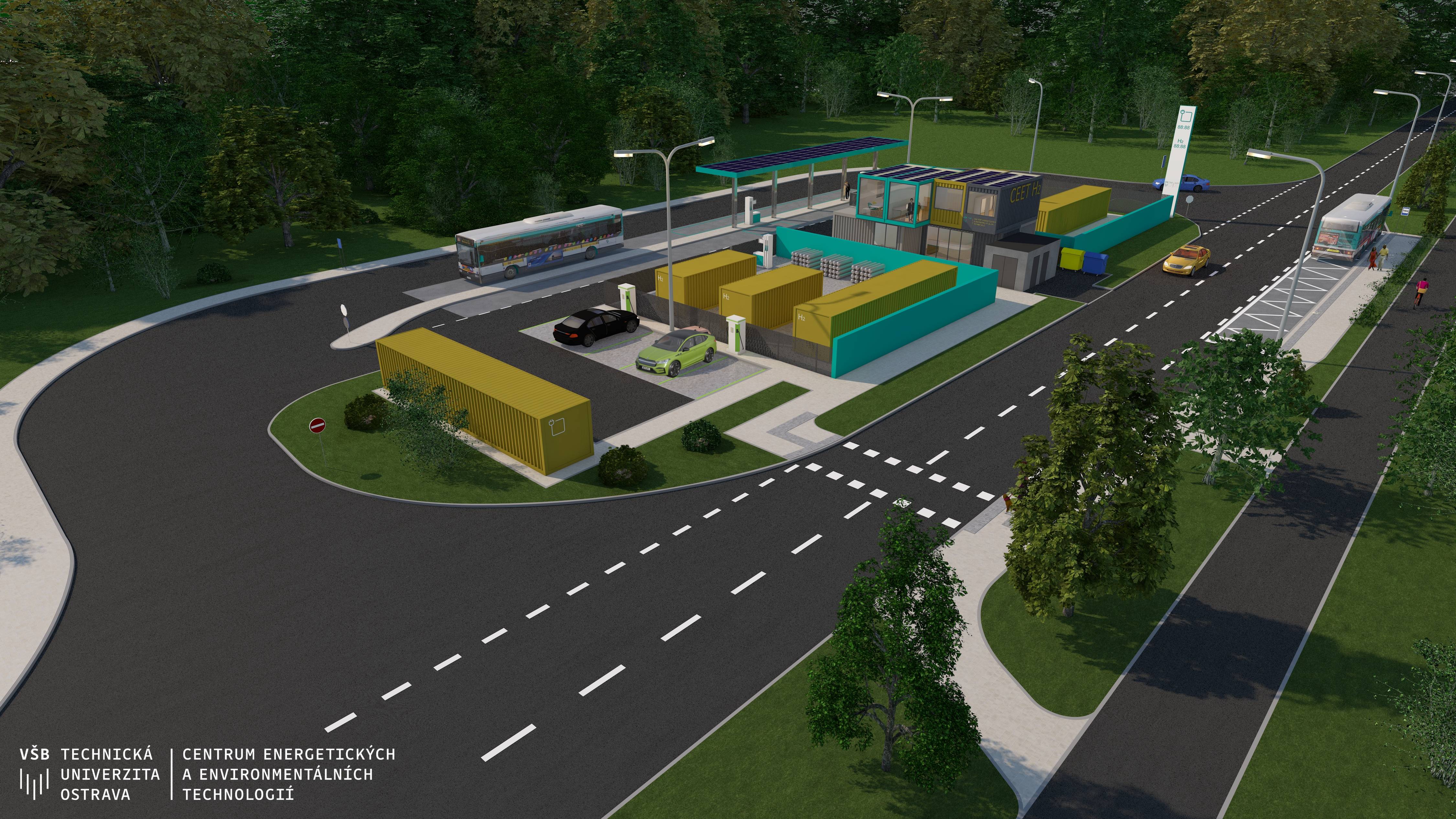
Data presented from pilot projects and international experience show that hydrogen buses enable rapid refuelling, stable operation even in winter conditions, and lower demands on reinforcing the power grid. At the same time, CEET is involved in the preparation of a pilot hydrogen hub in the Moravian-Silesian Region, combining renewable hydrogen production, storage, and its use in transport.
“Planning the transition to low-emission vehicles must start well in advance. Hydrogen projects typically involve a preparatory phase lasting several years and require precise alignment of demand, infrastructure, and financing,” said Lukáš Prokop, Director of the ENET Centre, which is part of CEET.
The project is being implemented in cooperation with SOLAR GLOBAL a.s. and other industrial partners, including Messer Technogas s.r.o. The shared objective is to offer regions and cities realistic scenarios for meeting legislative requirements without reducing the availability of transport services, while placing emphasis on long-term economic sustainability.