The LRI ENREGAT has long offered open access to Czech and foreign researchers to equipment and technological units focused on the energetic utilisation of waste and the cleaning of waste gases, which help to better understand the processes of emission formation, transformation, and reduction. The significance of the infrastructure also lies in the fact that it offers testing not only on a laboratory scale but also on a pilot scale, thereby enabling the verification of technologies in conditions closer to real operation.
The introductory part of the meeting was led by Lucie Obalová, coordinator of the LRI ENREGAT, who summarised the events of 2025. In her presentation, she introduced the current team of operators, the instrumentation, projects implemented using the infrastructure, and specific user results achieved in the past period. These included scientific publications, final theses, applied results, and cooperation with industrial partners.
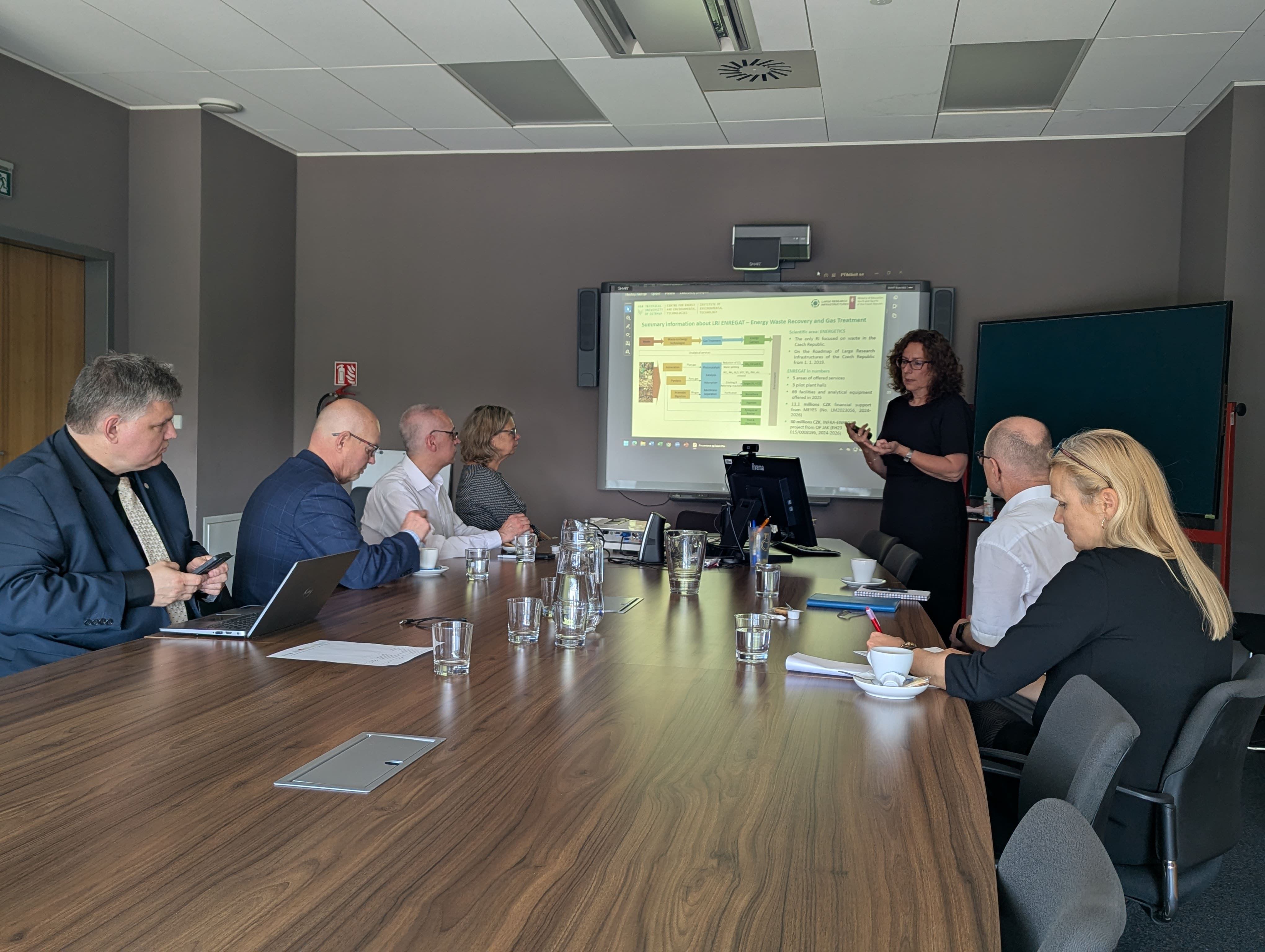
The presentation also included the introduction of new instruments acquired within the infra-ENREGAT project (CZ.02.01.01/00/23_015/0008195) supported by the Ministry of Education, Youth and Sports and co-funded by the European Union, and a web application that facilitates the preparation of project applications for applicants wishing to use the infrastructure in open access mode.
"The Large Research Infrastructure ENREGAT is a unique base in the Czech Republic for research in the field of energetic waste processing and waste gas cleaning. It has been on the Roadmap of Large Research Infrastructures since 2019. During its operation, more than 600 applications for the use of instrumentation have been submitted, which pleases us greatly and at the same time provides feedback that its operation makes sense," stated Lucie Obalová. "This view is also shared by the members of the scientific board, who evaluated the results shown today very positively," she adds.
The introductory part was followed by Barbora Grycová, administrator of the LRI ENREGAT, who presented the scientific board with the results of a recent questionnaire survey on the satisfaction of the infrastructure's users. Feedback from users is important for the further development of services, improving access, and setting up support for researchers who use the infrastructure.
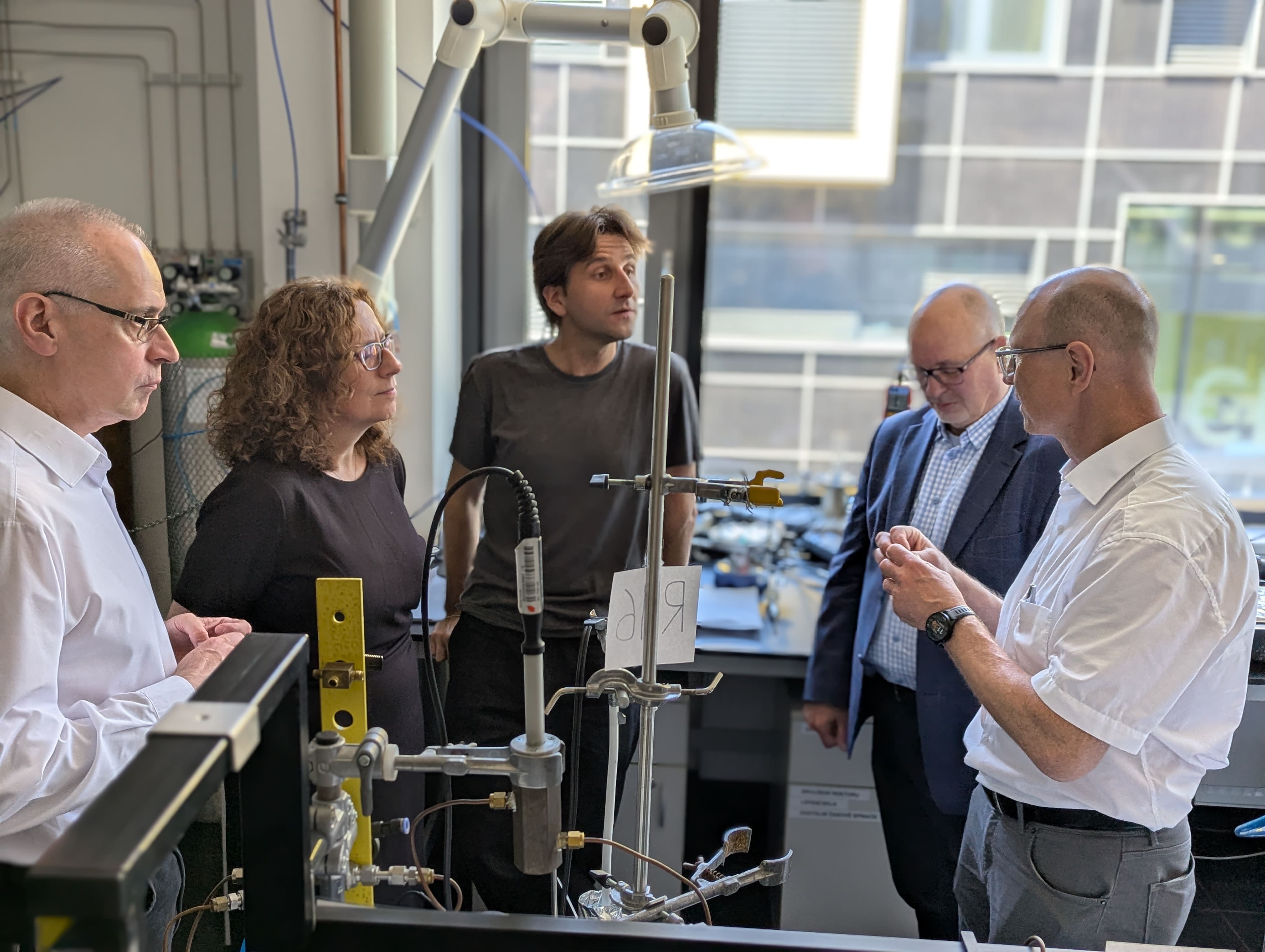
The presentation part was followed by an excursion around the laboratories of the Institute of Environmental Technology. The board members were able to view the new instrumentation and discuss the possibilities of its utilisation in areas such as combustion and thermochemical processes, pyrolysis, anaerobic digestion, catalytic and photocatalytic gas cleaning, sorption processes, or membrane separation.
The Scientific Board of the LRI ENREGAT brings together experts from the Czech Republic, Poland, and Austria. The members are Franz Winter from the Vienna University of Technology, Jacek Grams from the Lodz University of Technology, Lucjan Chmielarz from the Jagiellonian University in Kraków, Libor Čapek from the University of Pardubice, Jan Nedělník from the Research Institute for Fodder Crops, Ltd., and Kamila Kočí from VSB-TUO. Their professional focus covers environmental technologies from catalysis and photocatalysis, through pyrolysis and thermal waste processing, as well as materials engineering.
The programme of the meeting concluded with a joint lunch and an informal discussion on the future direction, further possibilities for utilising the infrastructure, new research topics, and the needs of users.