Institute of Environmental Technology
The Institute of Environmental Technology (IET) was established in August 2014 from the university-wide Centre for Environmental Technology (CET), when it was granted the status of a university institute pursuant to Act No. 111/1998 Coll., on Higher Education Institutions.
The establishment of IET as a university institute reflected changes associated with the project “Institute of Environmental Technology”, implemented under the Operational Programme Research and Development for Innovation under the leadership of Professor Karel Obroučka in cooperation with the University of Ostrava between 2011 and 2013. As part of the project, a new research pavilion was constructed, which now houses the Institute, and modern research equipment, instrumentation and technological units were acquired.
Since 2019, the research infrastructure of the Institute of Environmental Technology, focused on waste-to-energy technologies and the treatment of flue gases and waste gases, has been included in the Roadmap of Large Research Infrastructures of the Czech Republic and supported by the Ministry of Education, Youth and Sports of the Czech Republic through the project “ENREGAT – Energy Recovery from Waste and Gas Treatment” (LM2018098).
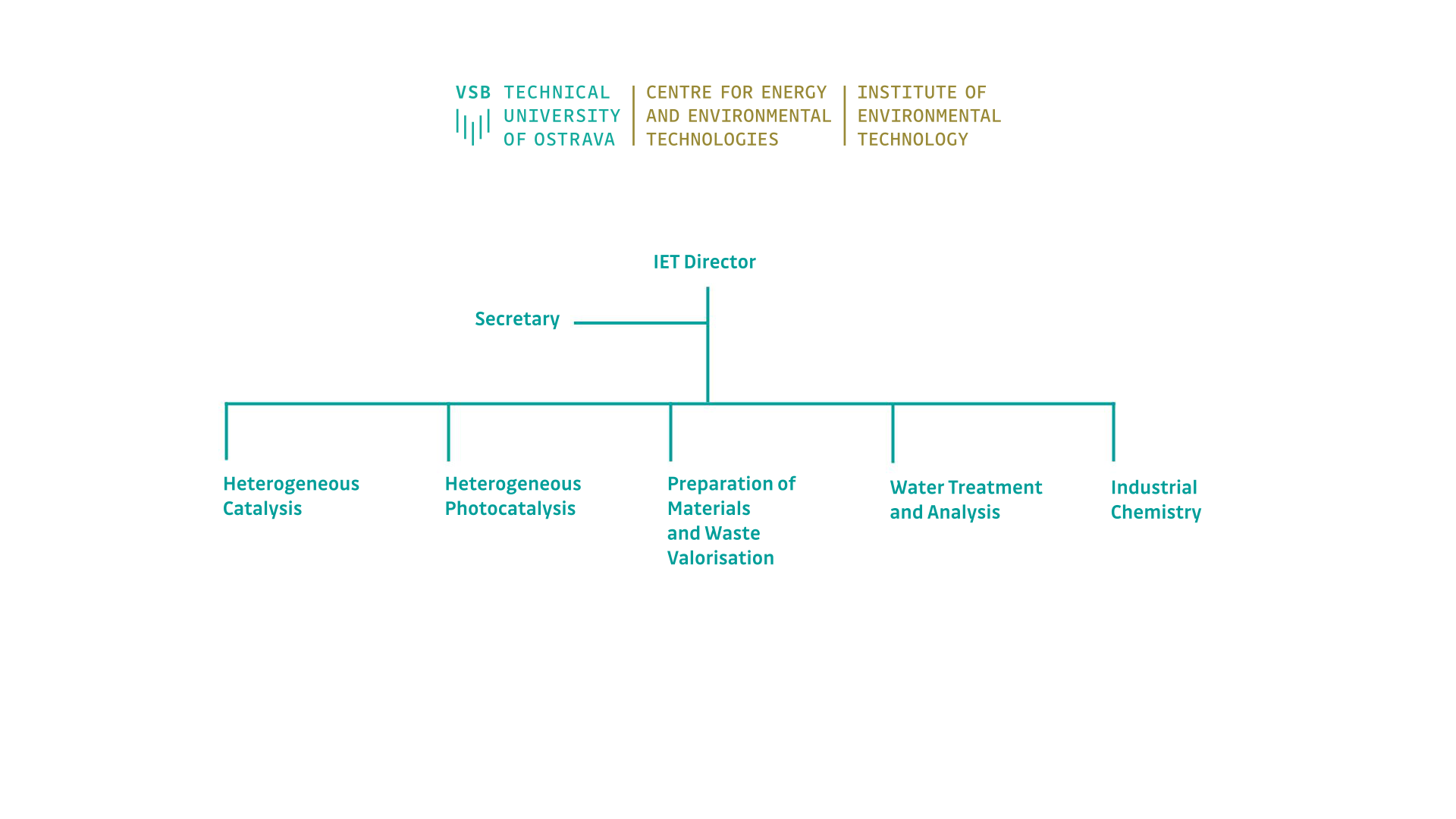
The Institute of Environmental Technology is headed by prof. Ing. Lucie Obalová, Ph.D.