The CEET Nanotechnology Centre organised an international expert seminar titled New Energy Solutions for Industry: Scientific Insights, Technological Innovation and the Future of Industrial Energy on the premises of the VSB – Technical University of Ostrava auditorium. The event uniquely connected investigators of the strategic projects REFRESH, MATUR, DMS MEET, and CirkArena, which include experts from prestigious European universities and research institutions. Within the professional program, they explored current topics, from advanced energy storage and harvesting technologies with the development of new materials, through hydrogen, all the way to a sustainable raw material base.
The entire seminar was ceremonially opened by the Director of CEET, Stanislav Mišák, who in his opening remarks emphasised the importance of materials and energy research for strengthening societal resilience in times of geopolitical and raw material changes:
"The world has changed. The geopolitical landscape has shifted, and with it, the raw materials policy that significantly affects the everyday lives of us all - from basic materials to energy, transport, and industry. The challenges we have set for ourselves within the scientific community have taken on much greater significance. We simply have less time to solve them. Therefore, I perceive organising this type of seminar as extremely important. It is a brilliant platform for sharing experience in the field of materials research, with the help of which we can strengthen the resilience of society. I am very glad this is taking place within the REFRESH, MATUR, MEET, and CirkArena projects, which are important not only for our university and the Moravian-Silesian Region but also in the context of the Czech Republic and Europe. For me personally, they are also the fulfilment of a dream that originated over ten years ago when I first planned the structure of a large scientific platform that later became the foundation of the REFRESH project."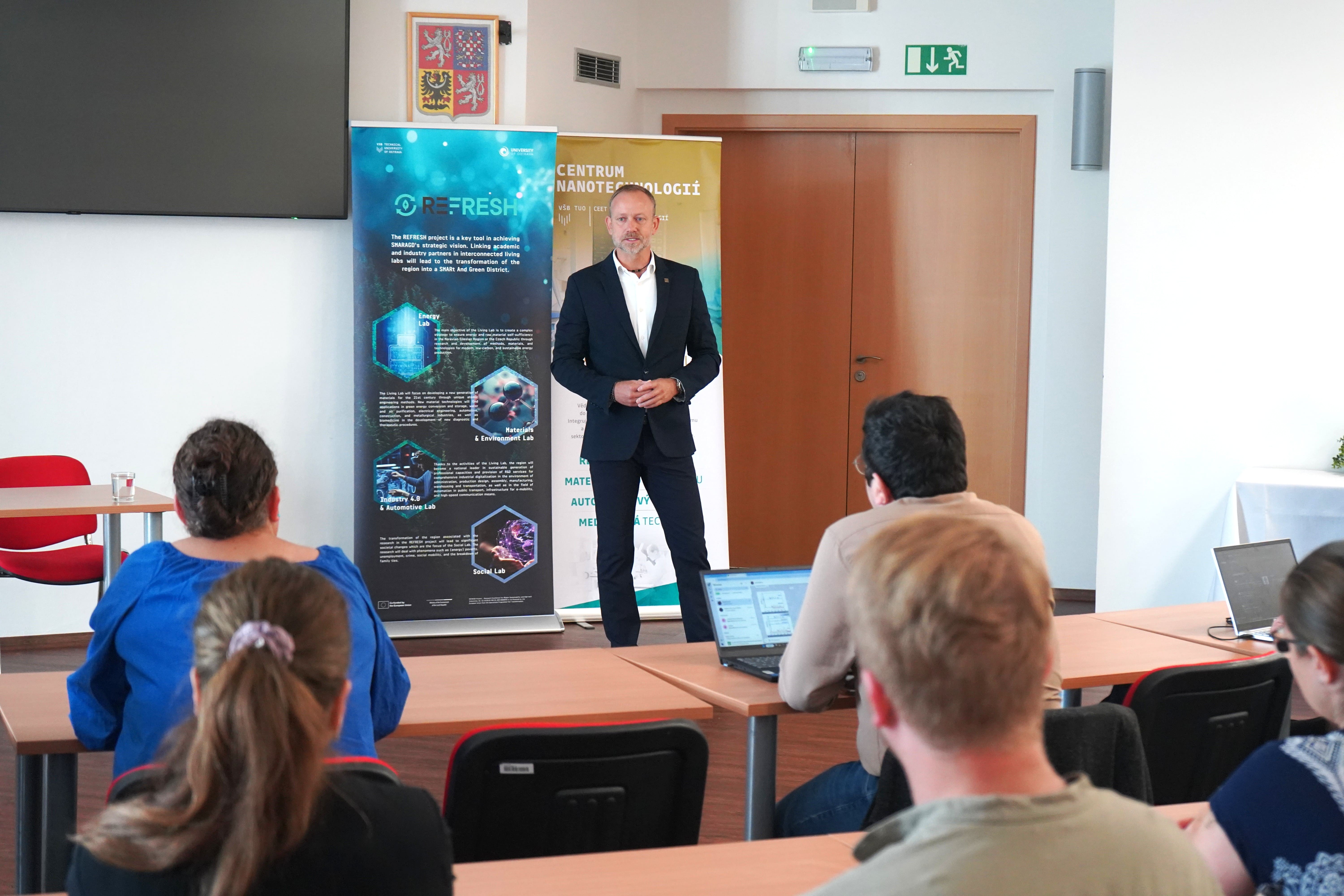 Gražyna Simha Martynková, Director of the Nanotechnology Centre, added:
"The international research team of the CEET Nanotechnology Centre is active in all the facility's key projects. Scientific gatherings, where we combine expert lectures and practical workshops, therefore help not only to intensify cooperation across project topics but also to make the preparation of joint results more efficient."
The Future of the European Battery Industry and Sustainable Composites
Among the main international speakers was Hatem Akbulut from Sakarya University in Turkey, who focused on the use of screen printing in the production of battery components.
"The current production of Li-ion batteries in Europe is significantly more expensive than in Asian countries, which benefit from more accessible raw materials and immense know-how. Europe therefore needs its own competitive technologies. One of the solutions could precisely be screen printing. This well-known technology, used for example in textile and paper printing, can be adapted for the production of battery components. Using specially developed inks, anodes, cathodes, and electrolytes can be produced via screen printing. Screen printing also holds great potential in the production of solid-state batteries, which could be crucial for the future of European electromobility," stated Hatem Akbulut.
The topic of advanced materials was followed up by Andrea Sorrentino, Scientific Director of the Italian National Research Council (CNR), who presented functional and sustainable polymer composites for energy applications. Alongside the actual design and processing of these materials, he also focused on their circularity and options for further utilisation.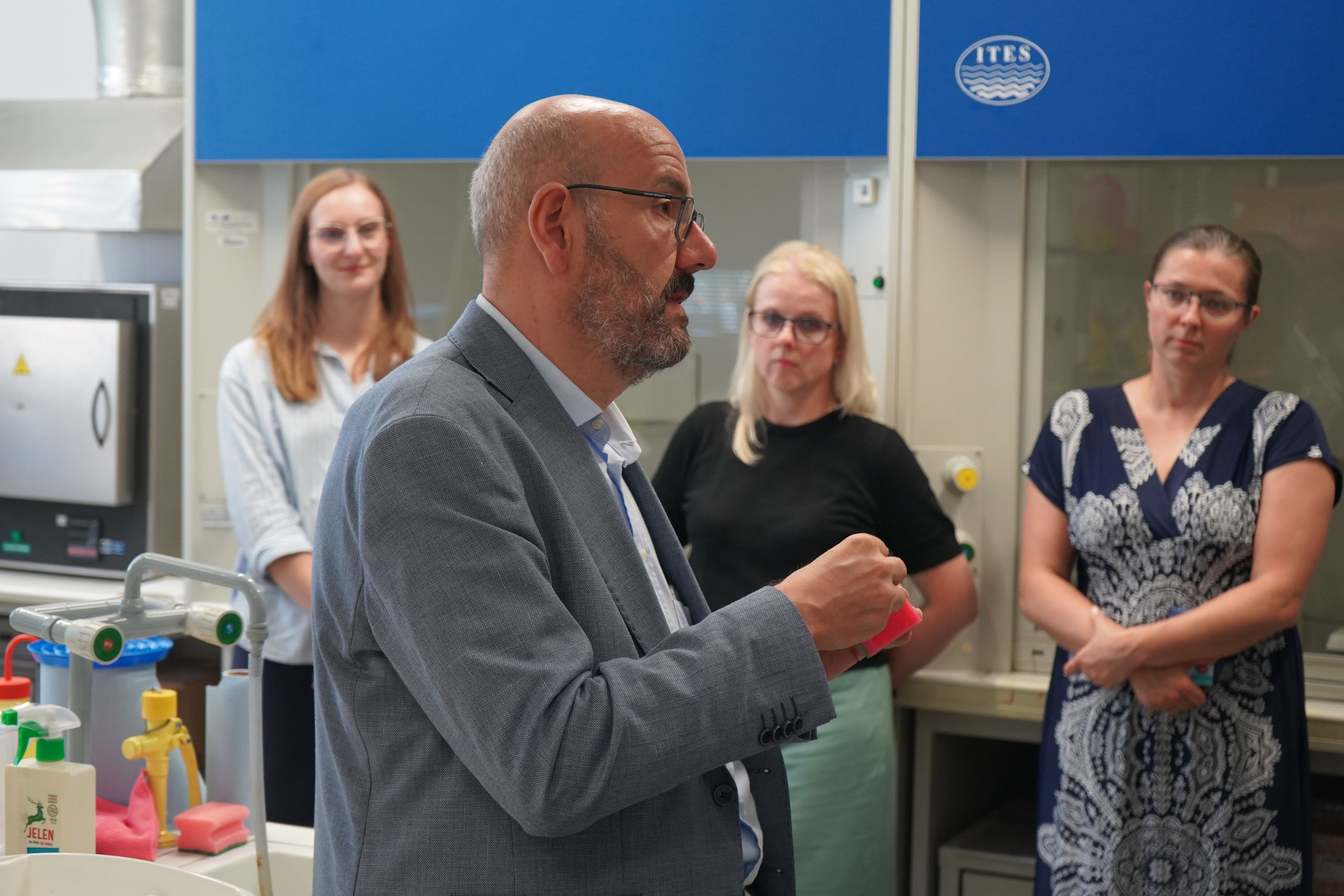
Nanowires and the Large-Scale Production of 2D Materials
The second day of the seminar was opened by Didier Pribat from the French National Centre for Scientific Research (CNRS), who, in his lecture, addressed nickel silicide nanowires and their utilisation in modern devices for generating and storing electrical energy.
"Nanomaterials are extremely important for the future of energy devices, whether it concerns solar cells or batteries. Both one-dimensional materials, such as nanowires, and two-dimensional materials, such as graphene or certain transition metal dichalcogenides, are of interest. All of them can find application in the field of energy storage," noted Didier Pribat.
Subsequently, Tuğrul Çetinkaya, co-founder of NESSTEC Energy & Surface Technologies Inc. and a professor at Sakarya University, gave his presentation. In his lecture, he focused on the large-scale production of two-dimensional materials, their properties, and their potential applications, primarily in the areas of energy storage and supercapacitors. He emphasised their attractiveness for both research and industry, which stems mainly from high electrical conductivity and a large surface area. He identified scaling up production while maintaining the required quality of materials, which often declines with increasing production volume, as one of the primary challenges.
New Materials for Photovoltaics and Carbon Capture
The final day of the programme brought further significant topics linked to sustainable energy and environmental protection. Martin Foldyna from the French CNRS addressed new materials and the future of photovoltaics, which play a significant role in the ongoing energy transition.
Bart Van der Bruggen from the Belgian KU Leuven presented hybrid membrane technologies, focusing on the utilisation of membrane systems for more efficient carbon capture and subsequent resource recovery.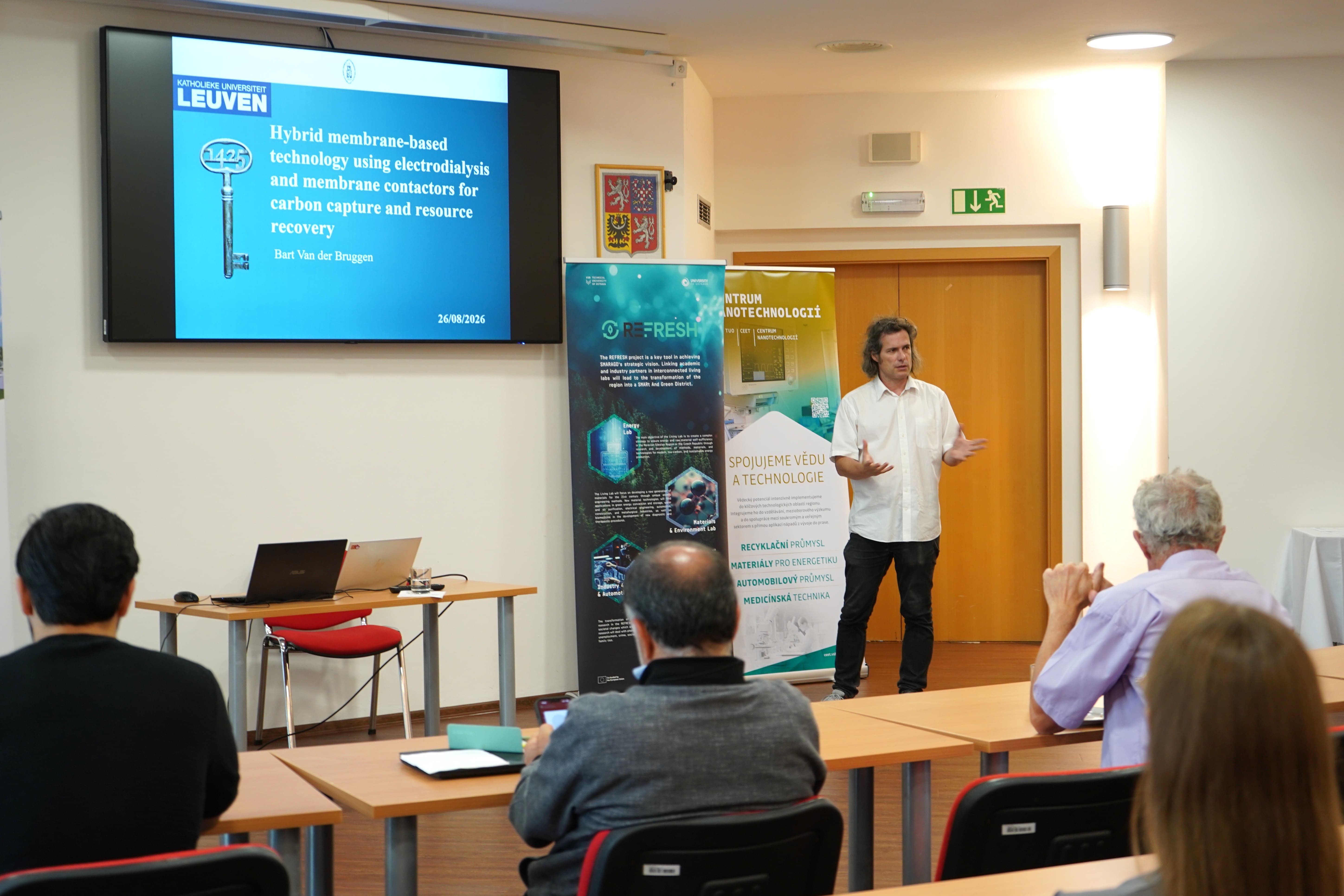
From Lectures to Practical Workshops
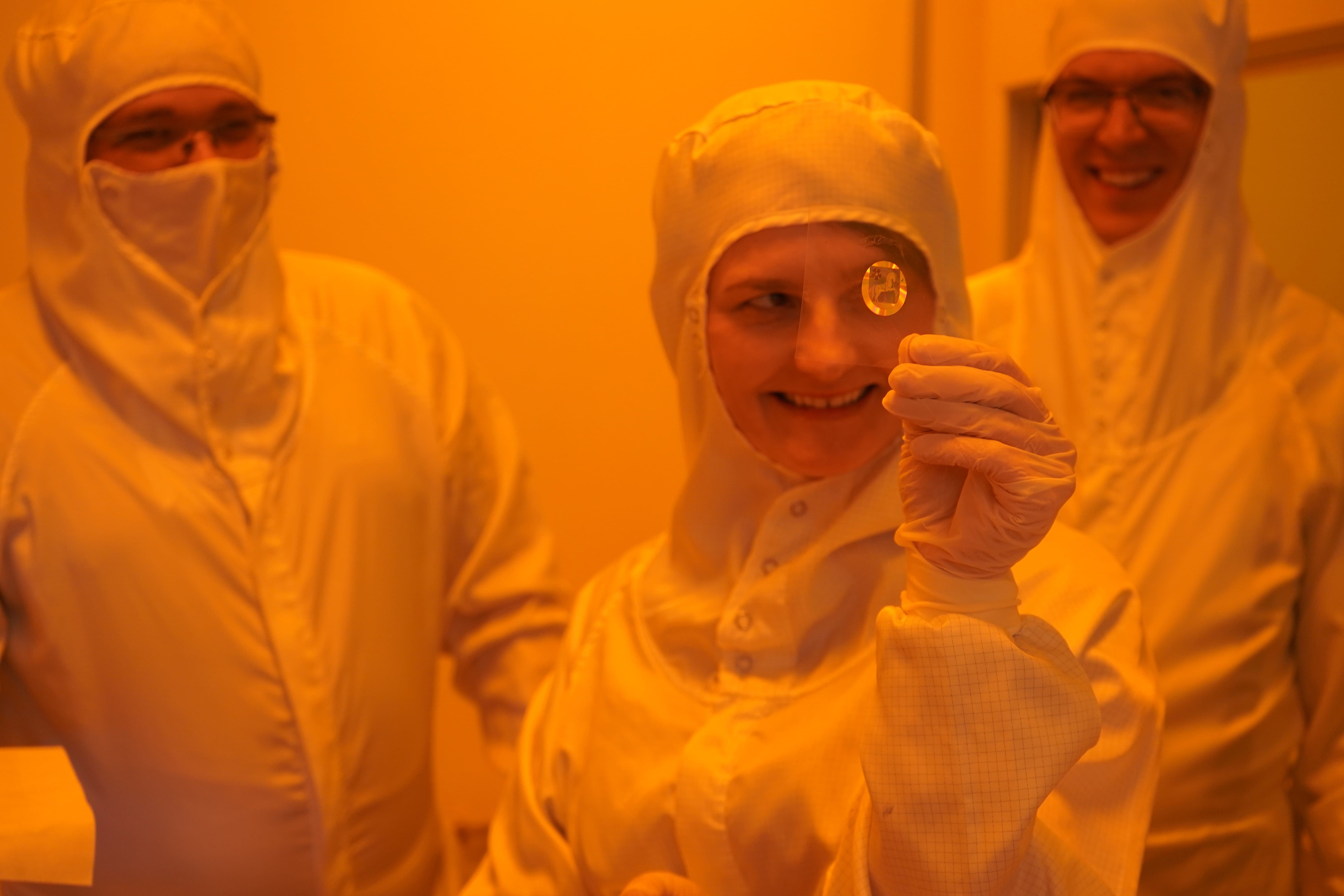
However, the programme did not stick merely to theory. The afternoon blocks were dedicated to practical workshops held directly in the CEET laboratories, where participants consulted on experimental procedures.
One of the workshops was led by Tuğrul Çetinkaya: "The workshop was a brilliant opportunity for me to follow up on my lecture and translate theoretical knowledge into a practical level. In the laboratory segment, we focused on the practical production of battery cells – from the preparation of electrode materials, through their processing and cutting, to the final assembly of the cell and testing. The aim was to clearly demonstrate how laboratory results can be advanced to a functional prototype and subsequently to industrial application."
Knowledge Sharing as the Foundation for Further Cooperation
The seminar supported the collaboration of teams involved in the REFRESH, MATUR, DMS MEET, and CirkArena projects and highlighted the significance of the international exchange of knowledge in finding solutions to technological and material challenges. These are vital not only for the further development of energy and industry but also for strengthening European competitiveness and resilience.