Trials in a dairy cattle barn marked another important step towards practical application for the technology, which had previously been developed and tested under laboratory conditions.
Field testing took place from 17 to 28 August 2026 at the Oponice site of the University Farm of the Slovak University of Agriculture in Nitra. The aim was to assess the technology’s potential to reduce ammonia emissions from livestock farming.
The experimental unit uses advanced oxidation processes (AOPs) that combine UV radiation, ozone and hydrogen peroxide to generate highly reactive species capable of oxidising ammonia. The system comprises two sequential stages in which ammonia is captured from the exhaust air and subsequently oxidised. The aim is not only to remove ammonia from the air, but also to convert the captured nitrogen into nitrogen-containing compounds with potential applications in agriculture or the chemical industry. The technology thus combines emissions reduction with opportunities to make further use of the captured nitrogen.
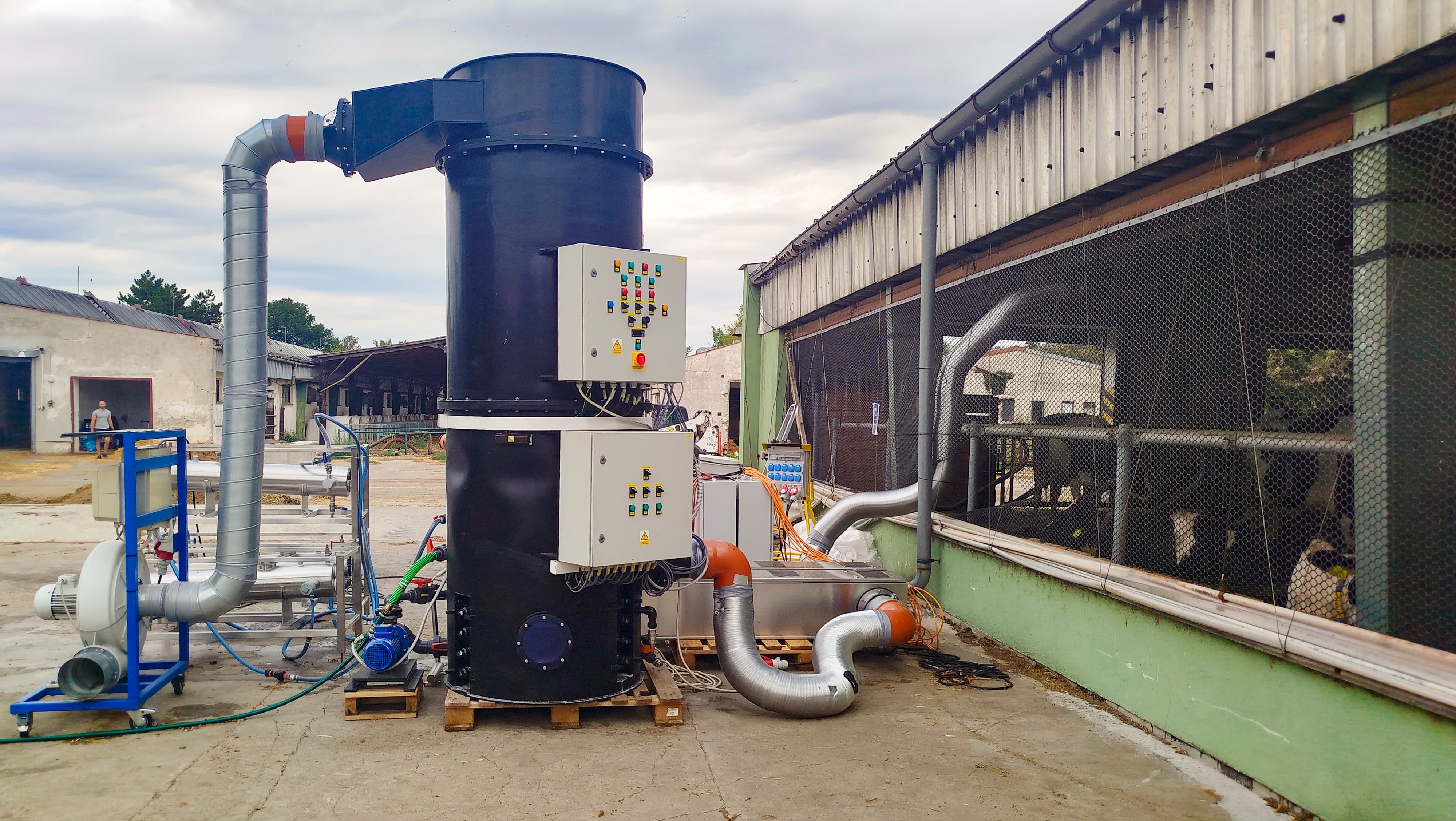
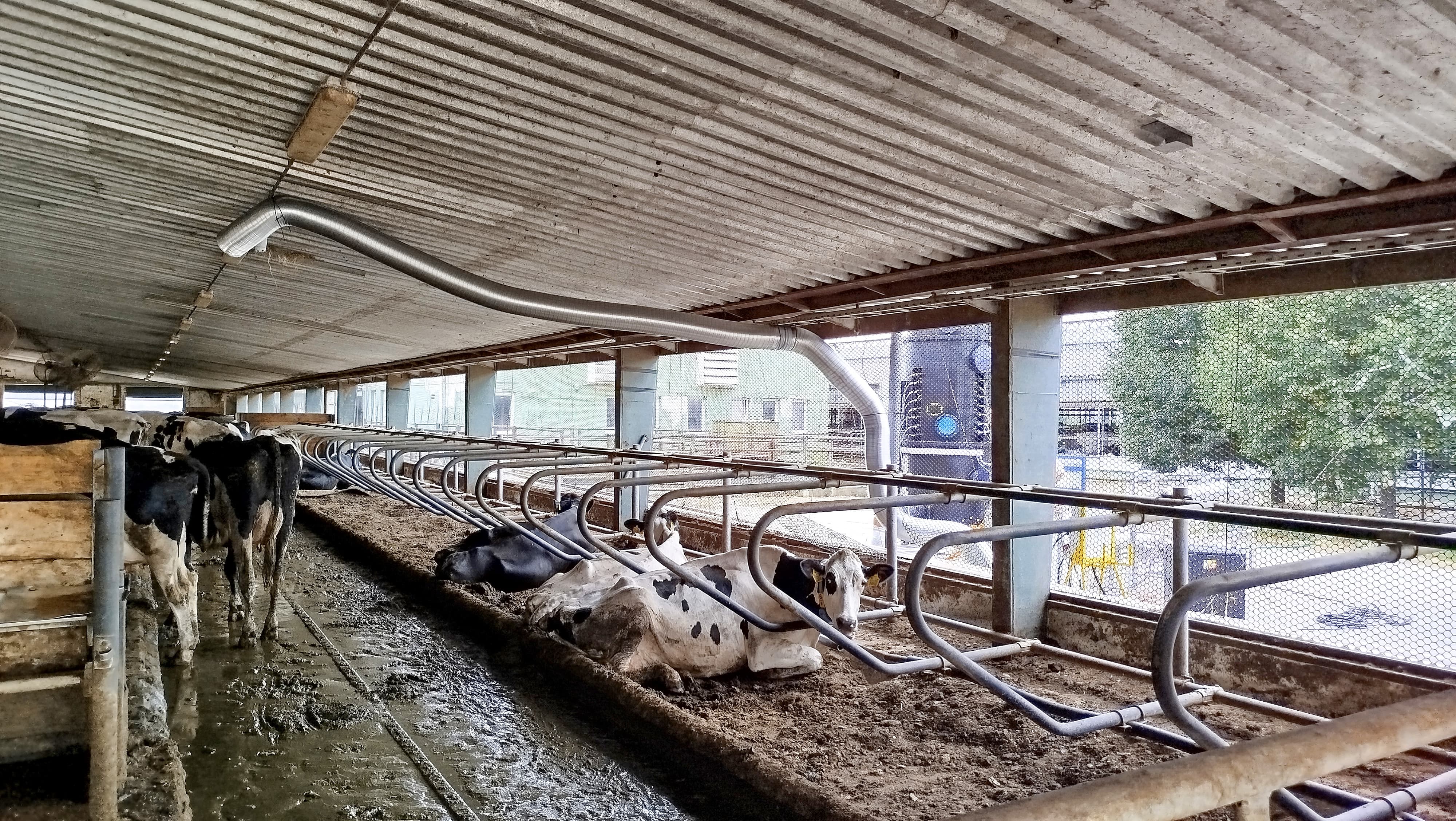
For the field trials, ducting was installed directly above the dairy cows’ cubicles to draw air from the barn into the experimental photochemical unit. The unit then operated continuously under real-world conditions. Ammonia concentrations in the incoming air ranged from approximately 1 to 10 ppm, with an airflow of around 226 m³ per hour through the unit. After just two days of continuous operation, approximately 50 mg/L of nitrate and 5 mg/L of nitrite were measured in the system’s aqueous phase. These initial results indicate that the captured ammonia is being converted into soluble nitrogen-containing compounds within the system. Detailed analyses of the collected samples are now continuing in the laboratories of the Institute of Environmental Technology at CEET, VSB – Technical University of Ostrava.
Researchers from VSB – Technical University of Ostrava worked with DEKONTA, a project partner involved in developing the technology, to prepare and install the experimental unit in Oponice. The field trials involved Dr Lucie Spáčilová and Tomáš Mati from the institute’s Heterogeneous Photocatalysis research group, together with Dr Radim Žebrák from DEKONTA. Professor Jana Lendelová contributed to the collaboration on behalf of the Slovak University of Agriculture in Nitra.
The Oponice trials also build on cooperation between VSB – Technical University of Ostrava and the Slovak University of Agriculture in Nitra, which have signed a Memorandum of Understanding. The joint experiments open up opportunities for further research into reducing agricultural emissions and exploring potential uses for captured nitrogen. The two universities are therefore also considering extending their collaboration under the forthcoming Horizon Europe call HORIZON-CL6-2027-01-ZEROPOLLUTION-03, “Improve the capacity to monitor and reduce air pollution from agriculture”, which specifically focuses on improving the monitoring and reduction of air pollution from agricultural sources.
The technology is being developed under the OP TAK project “Innovative technology for elimination of ammonia emissions from waste air using photochemical oxidation” (CZ.01.01.01/01/22_002/0000762). The project focuses on developing an innovative technology to eliminate ammonia emissions from exhaust air through photochemical oxidation.